Tap into Gen Z nostalgia trends with a photo booth
Make it stand out
Whatever it is, the way you tell your story online can make all the difference.
Why is a generation raised on smartphones queuing up for a technology their great-grandparents invented? The answer has powerful implications for how brands connect with people right now.
This blog post explores why nostalgia is such a powerful emotional force, why it resonates so strongly right now, and why a photo booth is one of the most authentic ways to tap into it.
Why this matters for your venue
Nostalgia is one of the most powerful emotional levers in marketing right now. And a photo booth happens to be one of the few physical experiences that triggers it across every generation in the room, not just one.
We can learn a lot from research into generational trends, as you’ll see. But they’re signals, not rules: not every 22-year-old is craving analogue texture and not every 70-year-old is confused by a search bar.
Even if Gen Z isn't your core audience, the feelings explored in this blog post are universal and give you a direct connection to your audience, whatever their age.
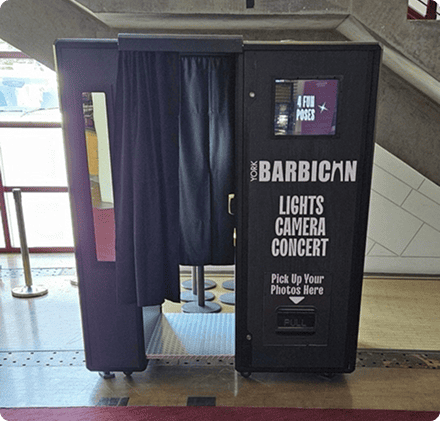
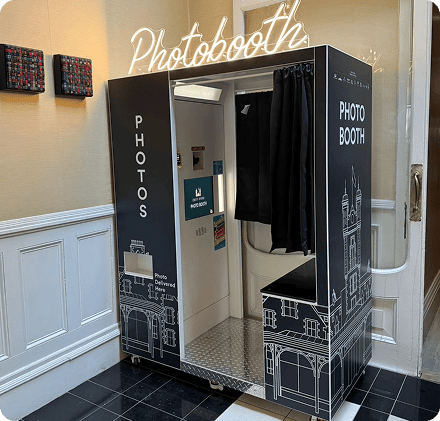
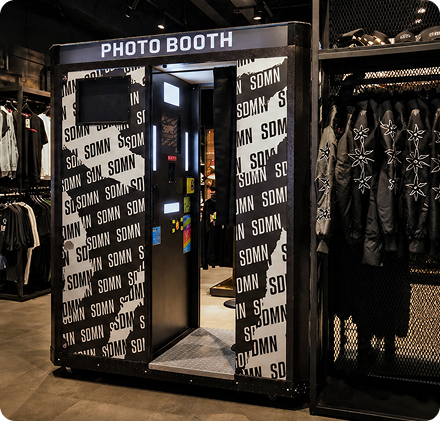
Photo booths were invented in the 1800s, making them older than anyone in the room. That means almost everyone has a reference point for them. Whether they bring back memories of passport photos, school discos, or weddings, or they're a completely new experience, photo booths evoke something familiar, joyful, and instantly recognisable - without explanation.
For you, that cross-generational pull is incredibly valuable. It’s rare that a single asset delivers an experience no one feels left out of.
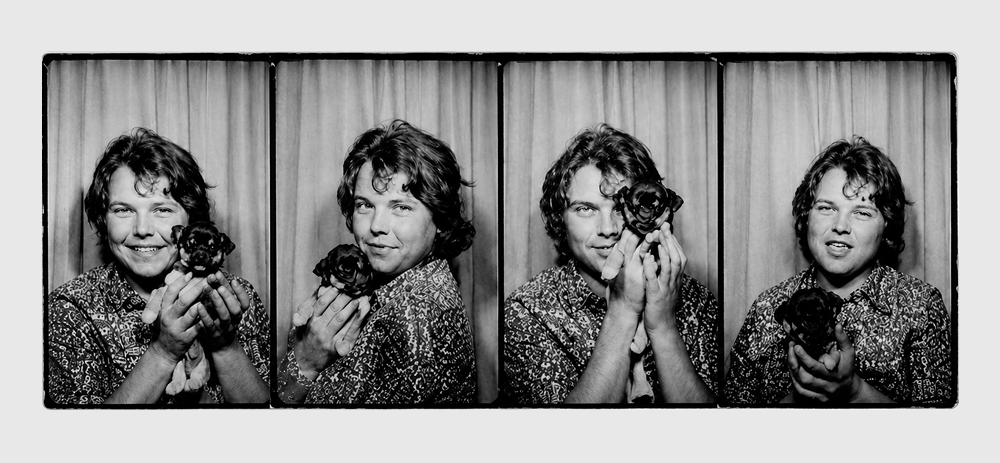
Why nostalgia builds trust faster than any campaign
Definition of nostalgia: A sad pleasure experienced in recalling what no longer exists; a wistful or sentimental yearning for a return to, or the return of, some real or romanticized past period, or some irrecoverable past condition or setting. Merriam-Webster
This “common and universally shared enigmatic emotion” is now in the spotlight of psychological scientific research. We can experience individual and collective nostalgia, both with potentially negative consequences that are just starting to be studied further.
But the positive outcomes of nostalgia show increased feelings of “social connectedness, meaning, self-continuity, self-esteem and optimism.” This combination makes people more generous, trusting, and emotionally open.
As Daria Belova writes, “For marketers, nostalgia is a powerful ingredient because it’s an emotional shortcut to the audience.”
By evoking feelings of nostalgia, you’ll create an emotional resonance that targeted digital ads just can’t replicate. It goes beyond ‘giving warm and fuzzy,’ it’s a golden opportunity to build trust through real connection.
As Aaron Conway, Director at consultancy firm Ronin Management, has noticed: “When people feel uncertain, they don't want to be sold something new. They want to recognise something. Familiarity feels calming in uncertain times. If a brand uses an aesthetic or reference point that someone associates with positive memories, that brand immediately borrows the trust attached to those memories.”
That borrowed trust is perhaps the most valuable thing a brand can earn and nostalgia is one of the few shortcuts that actually works.
Anemoia: The feeling driving Gen Z's love of the past
Definition of anemoia: Nostalgia for a time you never experienced.
The Dictionary of Obscure Sorrows, John Koenig
Published in 2021, this book named the feeling of longing for something you've never had anemoia. It could be a time, a place, or an aesthetic you wish you could have experienced.
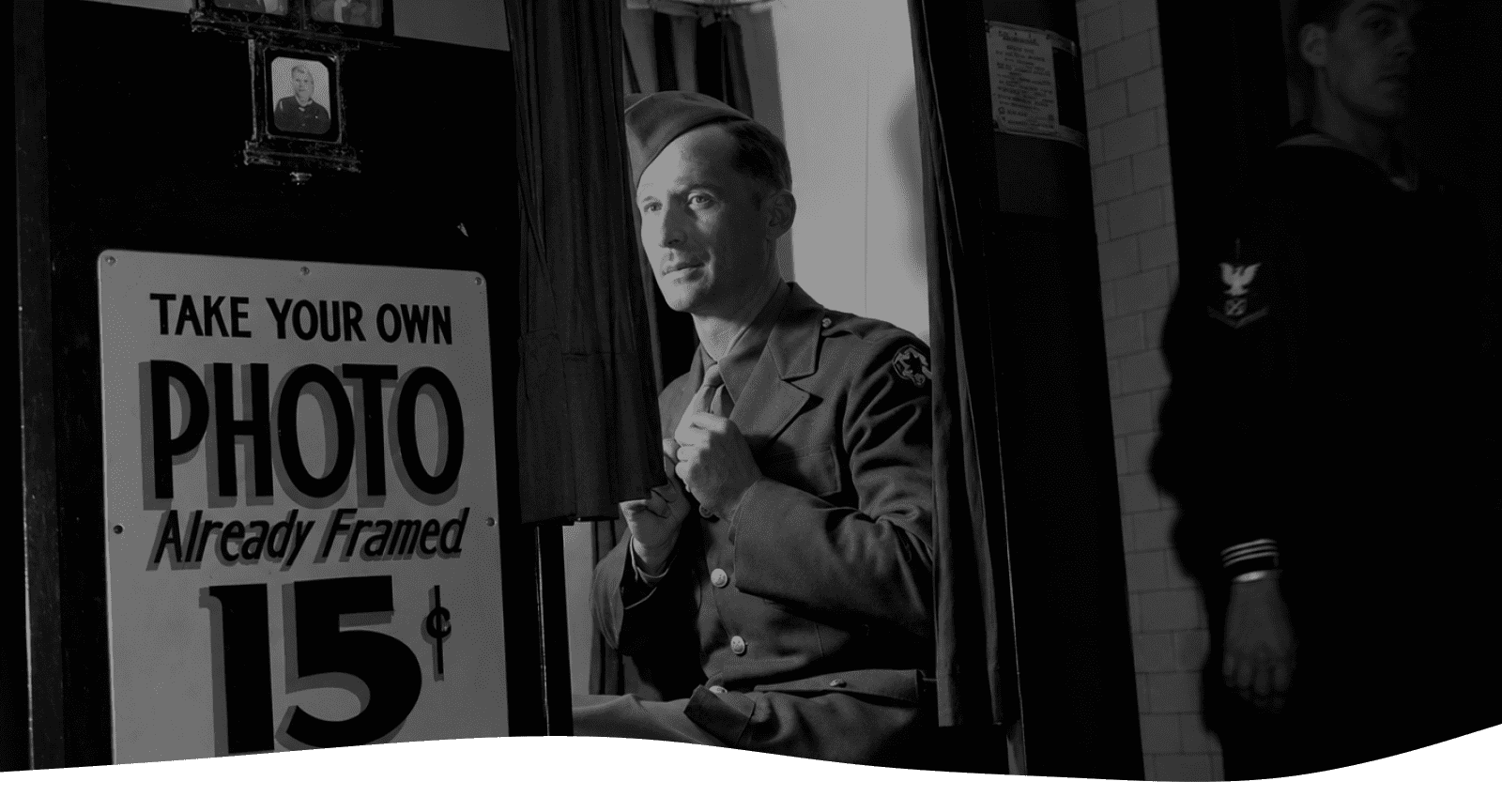
Koenig begins his explanation: “Looking at old photos, it’s hard not to feel a kind of wanderlust. A pang of nostalgia, for an era you never lived through. Longing to step through the frame into a world of black and white, if only to sit on the side of the road and watch the locals passing by.”
Many of us can relate to this, whatever our age. But Gen Z in particular seems to be feeling this very specific type of nostalgia right now.
Why are our youngest generations looking to the past for positivity?
Research by the British Standards Institution report gives us some data that begins to help answer that question. They asked people between 16 and 21 years old a set of questions about their relationship with the internet. Despite being complete digital natives, their answers are far from totally positive.
52% of young women said they’d rather be young in a world without the internet.
40% of young men said they’d rather be young in a world without the internet.
50% said a social media curfew would improve their life.
68% said they feel worse about themselves after spending time online.
It’s not surprising that so many of them feel anemoia for a pre-internet age they were never part of. It’s a time when many of the issues created by being constantly online simply didn’t exist.
In her article, “Why am I filled with nostalgia for a pre-internet age I never knew?”, Isabel Brooks examines the question with considerable balance and nuance, and concludes:
“I am haunted by the feeling that spending so much time on our phones has stolen something human and vital from our lives.
I don’t think any previous generations were ever so down on their own era, in such large numbers, to the point they’d erase its major salient feature. We feel nostalgic for a world that can’t be brought back.”
What a 26-year-old TV show tells us about right now
The continued popularity of Gilmore Girls is a strong example. It first aired from 2000 to 2007 and continues to appear in streaming top 10 lists years after it ended. In September last year, it was the ninth most-watched streaming show, with 534 million minutes viewed across Netflix and Hulu. Thirty-five per cent of viewers were women aged 18 to 34.
The insight for brands runs deeper than nostalgia as a trend. People return to Gilmore Girls because it means something to them: the cosy familiarity, the characters they know, and the world they feel they belong to.
Meaning beats everything else.
Dusting off archive branding won’t get you there. But showing your guests you genuinely understand how they feel about a loud world, where moments disappear almost as fast as they happen, will. You provide an experience that’s real, familiar and lasting.
Nowstalgia: When the present already feels like the past
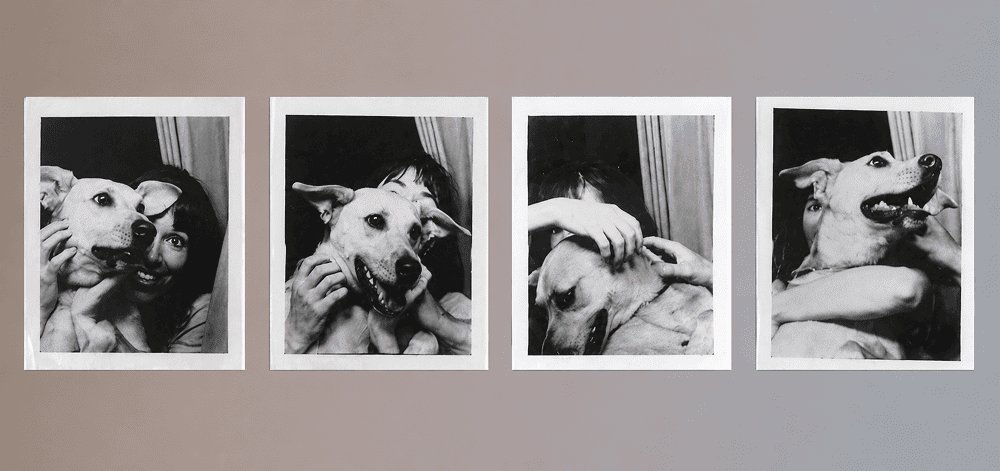
Definition of nowstalgia: According to Clear Thinking, nowstalgia is a feeling of sentimental longing for the present moment, due to an understanding of its inherent fragility, ephemerality, or transience.
For Gen Z, the generation that’s grown up entirely online, this seems to be a particularly acute feeling that they express in different ways: from what they watch to radically changing how much time they spend online.
Recent mental health research shows that there are still huge positives to young people’s online lives, with 76% saying they feel somewhat or very connected with others through online communities. And 63% saying they’d been in an online community that made them feel more confident or supported in who they are.
But the negatives are also experienced by this group:
68% have seen disturbing or harmful content
35% have seen suicide or self harm content
28% have seen pro-eating disorder content
And they’re becoming increasingly proactive about how they manage their online time. Other research shows that while 20% of consumers have deleted a social media app in the past 12 months, this rises to 29% among Gen Zs.
All generations would favour a ban on social media for under-16s.
These are young people who have spent years curating feeds, managing personal brands, and presenting polished versions of themselves to audiences they've never met. They're exhausted by it. And increasingly, they're craving something that feels real.
A photo booth creates that feeling of nowstalgia
For venue and marketing managers, this isn't just an interesting cultural moment to observe; it's a strategic opportunity. The research tells you something valuable about the people walking through your doors. They're exhausted by the performative, the filtered, and the fleeting. Understanding that is the first step. The second is giving them an experience that answers it.
There’s no imitation, borrowing, or fakery; a photo booth is a real experience. The printed strip that comes out the other end isn't a souvenir of a branded moment; it's proof of an actual one.
That's where the physical print becomes interesting from a brand perspective. It's an antidote to the algorithm. It can't be filtered after the fact. It can't be quietly deleted when the lighting isn't quite right. It lands in someone's hand, immediately and imperfectly, and that's the point. For a generation performing their lives in real time, something unedited and tangible feels almost radical.
The brands that understand this aren't trend-chasing. They're not slapping a retro filter on a digital activation and calling it nostalgic. They're recognising a deeper emotional truth: that people want permission to simply be present. To capture a moment without producing content out of it.
A photo booth, done well, gives people exactly that. And right now, that's not a small thing.
Beyond the moment: Why the print outlasts the campaign
In a world where most experiences evaporate the moment they happen, a photo booth hands someone a physical piece of the moment before they've even left the room.
Not a notification or a tagged post that disappears into a feed. Something they can hold, stick on a wall, or find in a drawer years later and actually feel something.
That's a rare thing to be able to offer people. And for the brands and venues willing to think past the trend, it's not a small thing to be known for.
A photo booth is one of the few experiences that creates real emotional connection across every generation, every visit, and every venue.
If you'd like to explore what yours could look like, get in touch and we'll show you.
Subscribe Our Newsletter
Stay in the loop with new products, partnerships, and exclusive news
Related Articles