Make it stand out
Whatever it is, the way you tell your story online can make all the difference.
Why photo booth strips create unforgettable client experiences
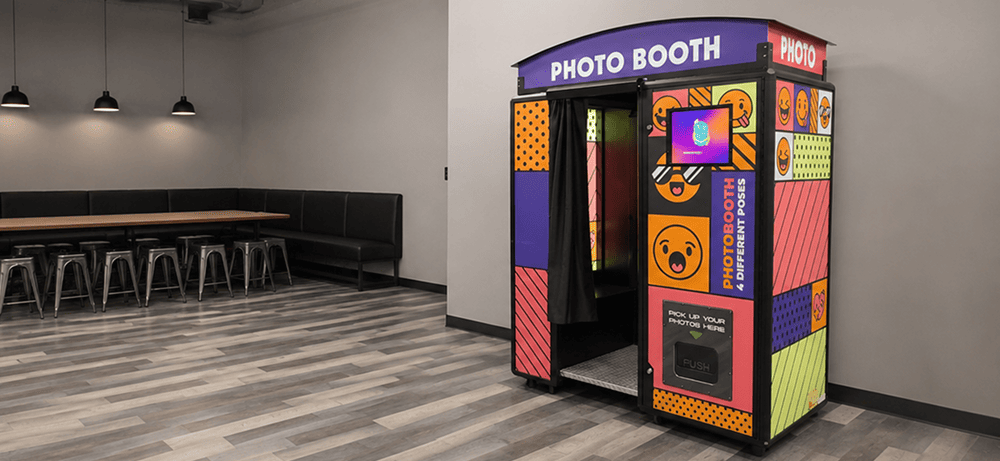
Every venue wants guests to remember their visit and talk about it afterwards. A photo booth does more of that work than almost anything else you could put in your space – and that’s why they’ve stayed so popular.
A strip of photos does something a million smartphone selfies can't. It takes memories out of storage to live with you. Research shows that physical prints create stronger emotional connections than digital images.
Here's why this matters for your venue
Guests who leave with a photo booth strip leave with something physical. It goes on a noticeboard, in a frame, or into a wallet, and it stays there for years. Displayed at home, shared on socials, talked about with the people who weren't there – that's continuous awareness, engagement, and word of mouth you don't need to pay for.
It shows up in the numbers too. Your email list grows with every visit. Guests stay longer, spend more, and come back. Branded UGC appears online without you having to brief, shoot, or pay for it. We've worked with many of our clients for 10+ years because they're seeing value for their guests, their brand, and their bank balance.
None of that is an accident. There's a reason a photo booth strip earns its place on a fridge for a decade, while thousands of digital photos sit forgotten on a phone. It comes down to the psychology of how memories actually get made, and it's worth understanding if you want to know why this works so well.
The problem with perfect photos
How many photos do you have in your camera roll right now? The average is 2,795.
The global photography statistics are quite extraordinary:
Approximately 2.1 trillion photos were taken last year: 94% of them on smartphones (that’s 61,400 photos per second!)
Every day, 14 billion images are shared on social media
Practically every moment of our lives can be documented. But does all this data really help us remember?
Volume overwhelm isn’t the only issue; it’s also the process. When every photo comes with the option to retake, reframe, filter, and edit, what we end up with isn't a record of what happened. It's a record of the version of what happened that we were happy to be associated with. That's more image management than making memories.
And this recognisable, uncomfortable feeling is supported by scientific research.
Autobiographical memory: The stories we tell ourselves
Autobiographical memory is how we form our personal sense of what has happened to us.
Dr. Fabian Hutmacher specialises in researching autobiographical memory in the digital age. He explains its importance: “Memories are crucial for defining who we are. They are a sort of reservoir that we refer to whenever we think about our lives.”
Neuroscientists have proven that autobiographical memory is formed when two different sections of the brain interact. The hippocampus helps process new life experiences and the prefrontal cortex sorts them into threads that connect our experiences.
It’s a reconstructive process, rather than a video replay. It's shaped by attention, emotion, and engagement. When we're focused on getting the angle right, we're not fully inside the moment. The photo exists but the memory creation system is disrupted when we’re distracted from the experience by the act of photographing it.
Photo-taking-impairment effect: Being the photographer takes you out of the photo
A 2013 study by cognitive psychologist Linda Henkel found that the act of photographing something can actually impair our ability to remember it. Because “the act of photographing the object appears to enable people to dismiss the object from memory, thereby relying on the external device of the camera to ‘remember’ for them.”
Our brains don’t store the memory because they’ve delegated that job to the camera.
Her research also shows that this photo-taking impairment effect can be reduced by engaging with what you photograph and doing so will actually help you remember.
Dr Hutmacher's example feels familiar: “If you go to a concert and you spend 90 minutes filming, focusing on getting a good angle, then it reduces your enjoyment of the situation, as well as the memory you have of it. On the other hand, if you record a snapshot because it’s your favourite song, then it can improve memory later.”
Why holding something in your hand changes everything
There's a reason a printed photo feels different to a photo on a screen, even when the image is identical. The difference is sensory.
A study published in the Journal of Marketing Research found that people who engaged with the same content in print versus digital formats spent longer with the printed version, showed greater pupil dilation, a reliable measure of genuine interest, and had measurably stronger recall a week later. Brain activity in memory regions was higher when the physical version had been handled.
The mechanism is well established. Touching something activates an additional sense, and that extra input creates a richer memory trace. A memory with more connections is more likely to resurface and more likely to last.
Researchers studying haptic engagement, including work coming out of Charles Spence's lab at Oxford, have consistently found that physical interaction with objects deepens cognitive and emotional processing in ways that screen-based engagement doesn't replicate.
A photo on a phone lives behind glass. A photo booth strip lives in your hands first, then on a fridge, pinboard, or in a frame or wallet. The memory of the laughter is reinforced by the photo’s physical existence.
Create unforgettable memories for your customers with a photo booth
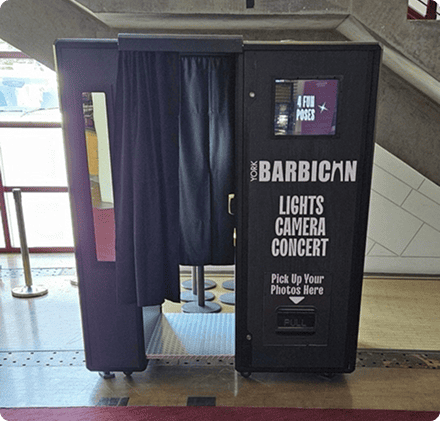
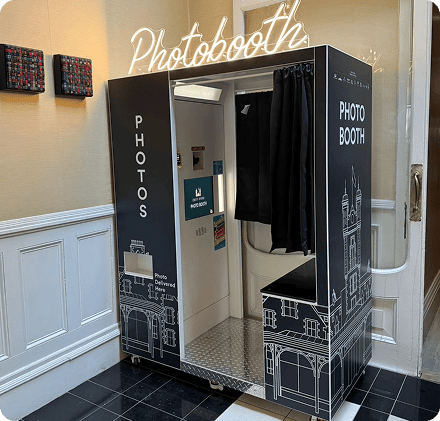
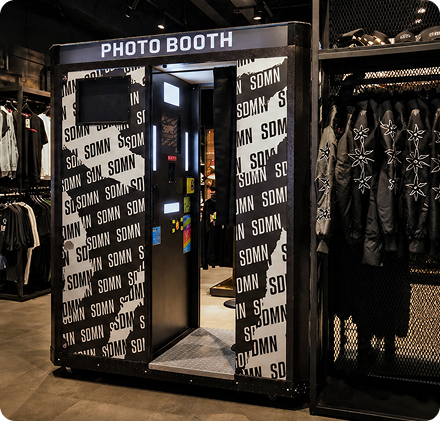
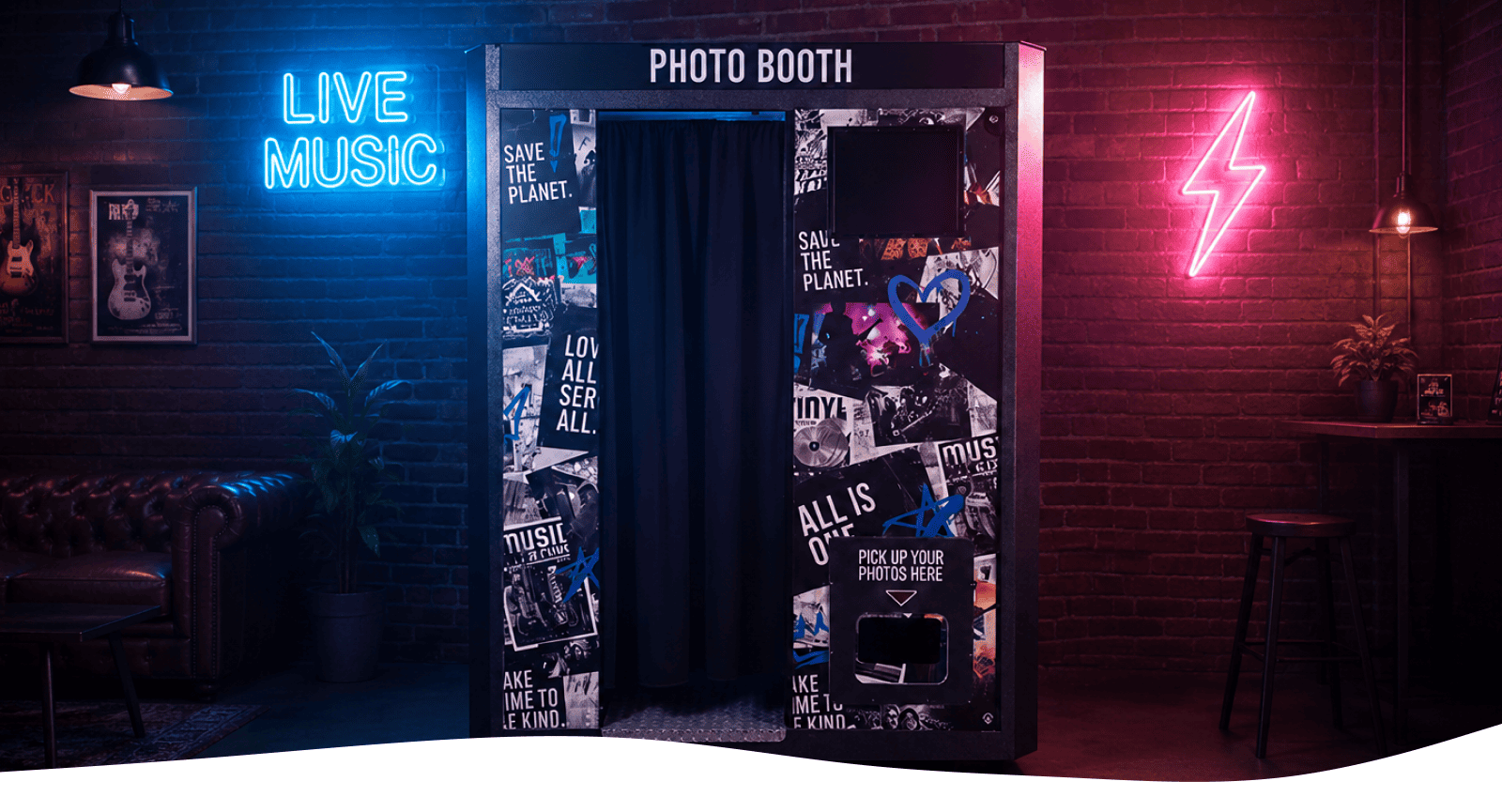
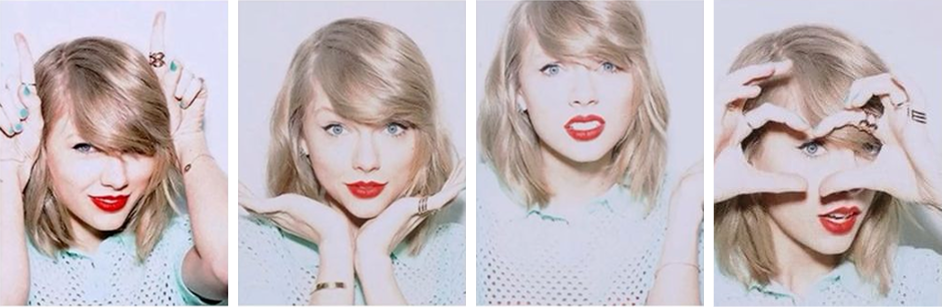
What gets captured with a photo booth is something that can’t be staged. The first frame is composed, the second people start to relax, and by the third people collapse into true chaos or joy. A story in four frames, with your guests as the main character – and everyone leaves with a copy of their little story in their hand.
If you want to put your brand in the frame of everyone's stories, let's chat. We can work out the best positioning and branding for your venue.
Subscribe Our Newsletter
Stay in the loop with new products, partnerships, and exclusive news
Related Articles